
The “Zitelle” of Gallese: a centuries old tradition of unmarried young women
AN ANCIENT RITUAL AT THE HEART OF THE SAN FAMIANO CELEBRATIONS.
Every year, during the celebrations of San Famiano, Gallese renews one of its most distinctive traditions: that of the Zitelle, young women from the village who take part in an ancient custom documented since the second half of the 16th century and associated with the saint’s processions since 1614.
The tradition has deep roots in the history of the Gallese community and originated from the custom of providing a dowry for young women from less affluent families, enabling them to marry.
Over time, this social practice evolved into a symbolic ritual that continues to be passed down and today remains one of the most distinctive elements of the celebrations in honour of San Famiano.
One of the most remarkable aspects of the tradition takes place during the dressing ceremony.
According to the ancient custom, the Zitelle’s white dress is not sewn, but created by wrapping the fabric around the body and securing it with pins.
There was a practical reason for this: the fabric remained intact and could later be reused as part of the young woman’s bridal trousseau.
Even today, the accompanying women assist the Zitelle as they prepare, carefully arranging the fabric, veil and every detail of the dress. These gestures, handed down through generations, make the dressing ceremony one of the most intimate and meaningful moments of the tradition.
The Zitelle then make their way through the streets of Gallese and take part in the celebrations, accompanied along the streets of the historic village. For a few hours, they become the living expression of a collective memory deeply rooted in the community.
The Zitelle of San Famiano are not simply the memory of an ancient custom.
They are a living tradition, preserved by the people of Gallese and renewed, year after year, by new generations.
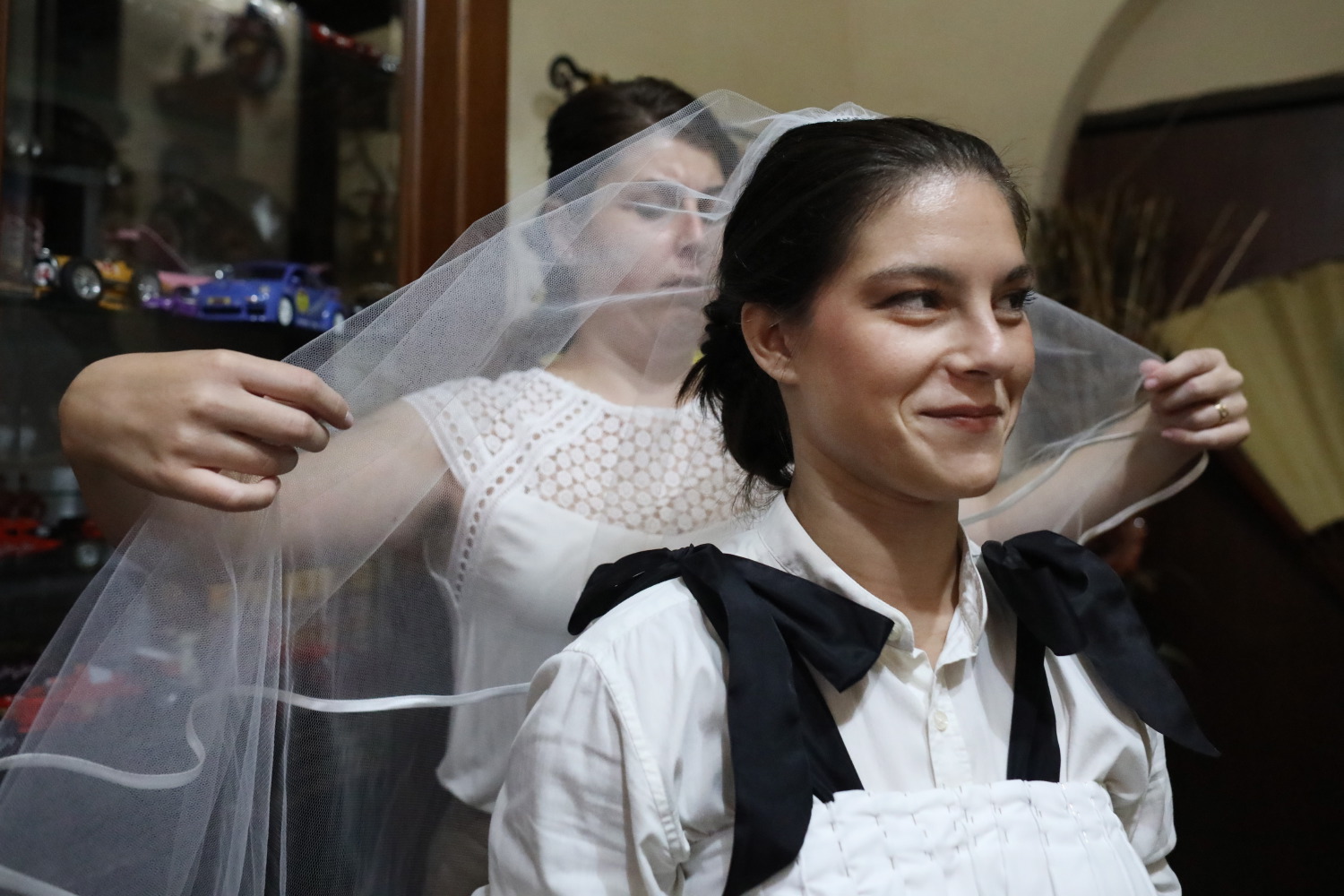
Gallese, Viterbo, Italy. One of the Zitelle receives her veil during the dressing ceremony, a central moment in the preparations before the celebration.
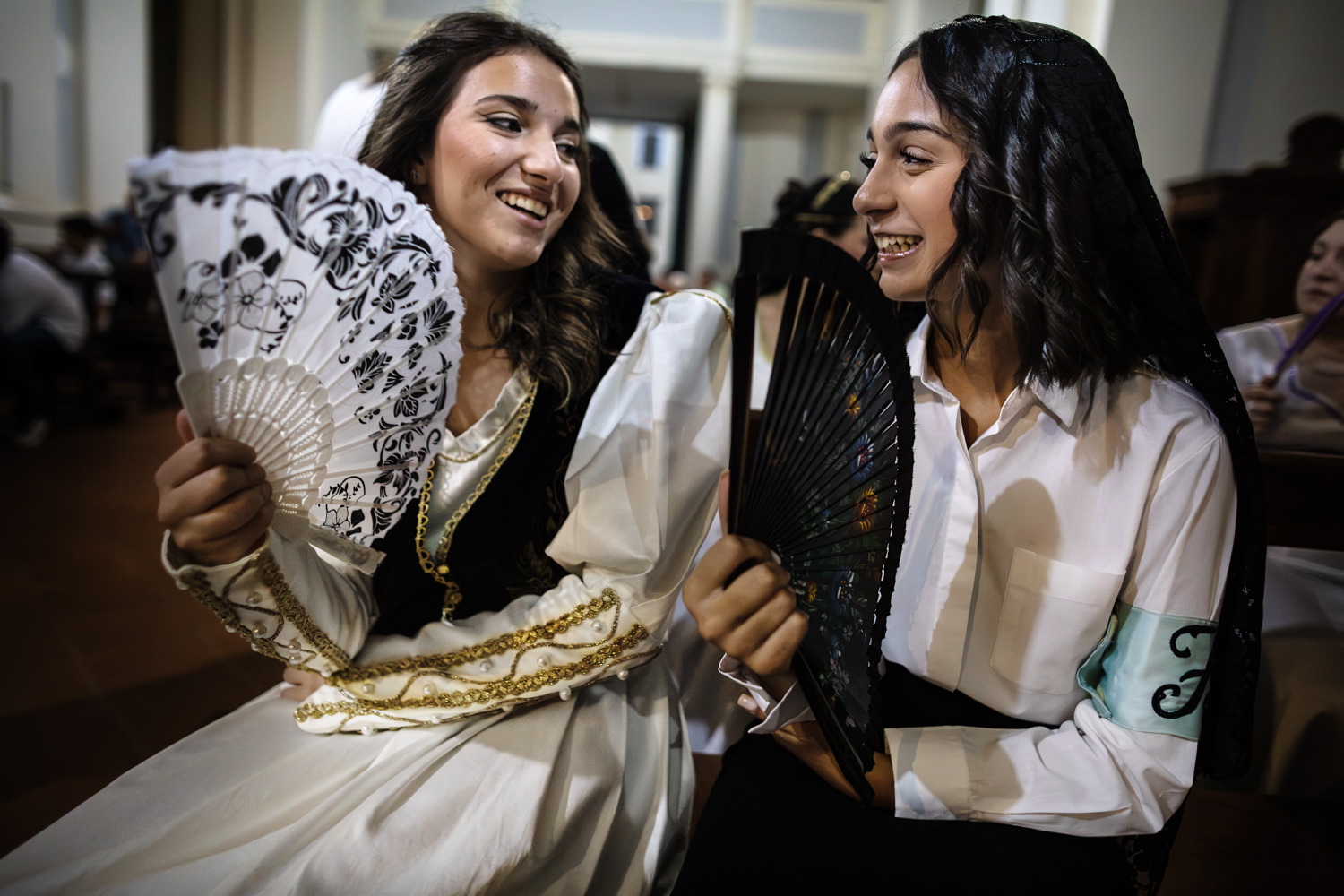
Gallese, Viterbo, Italy. A Zitella and her godmother wait for the celebration to begin, holding traditional fans.
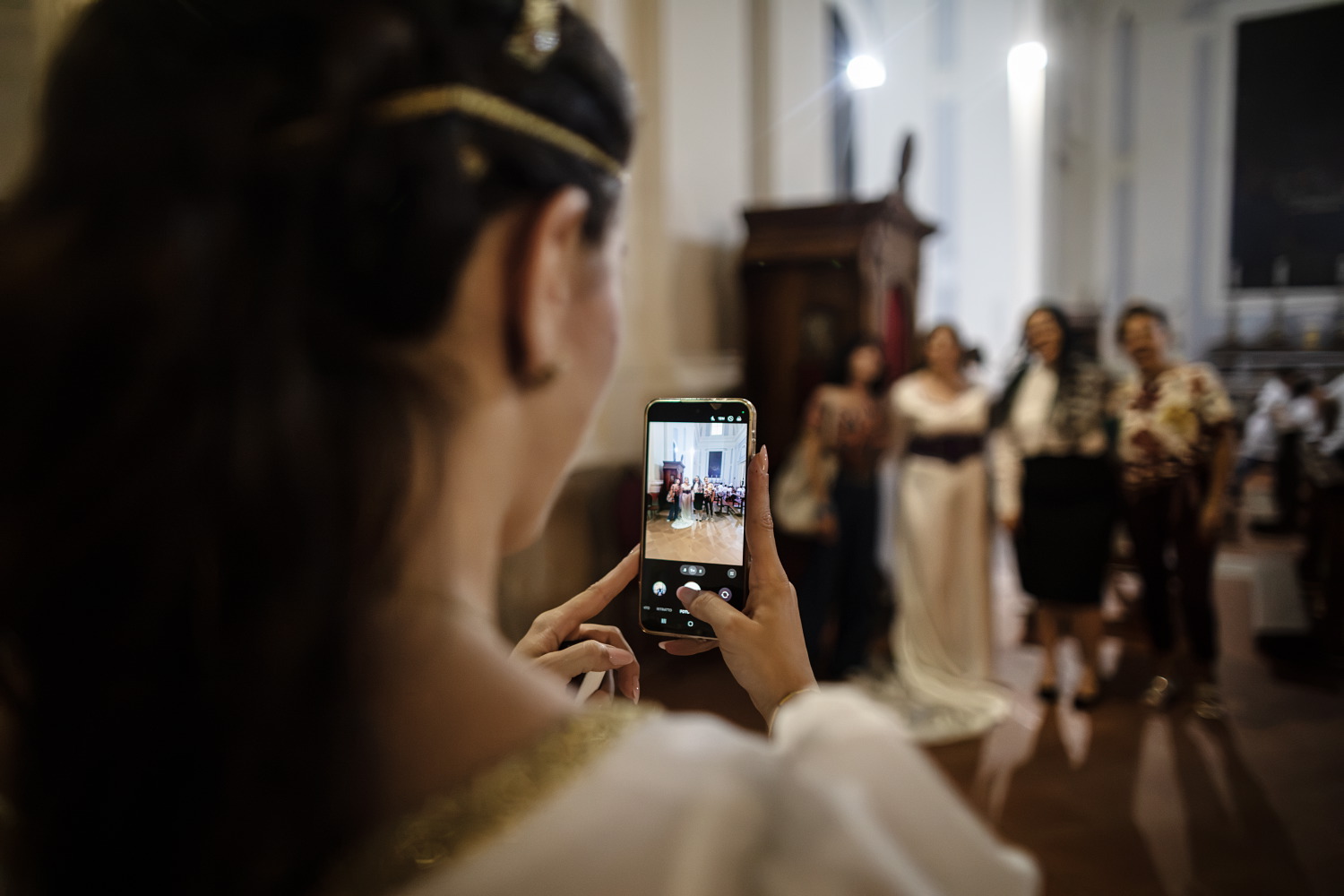
Gallese, Viterbo, Italy. A godmother photographs a Zitella with her family before the celebration.
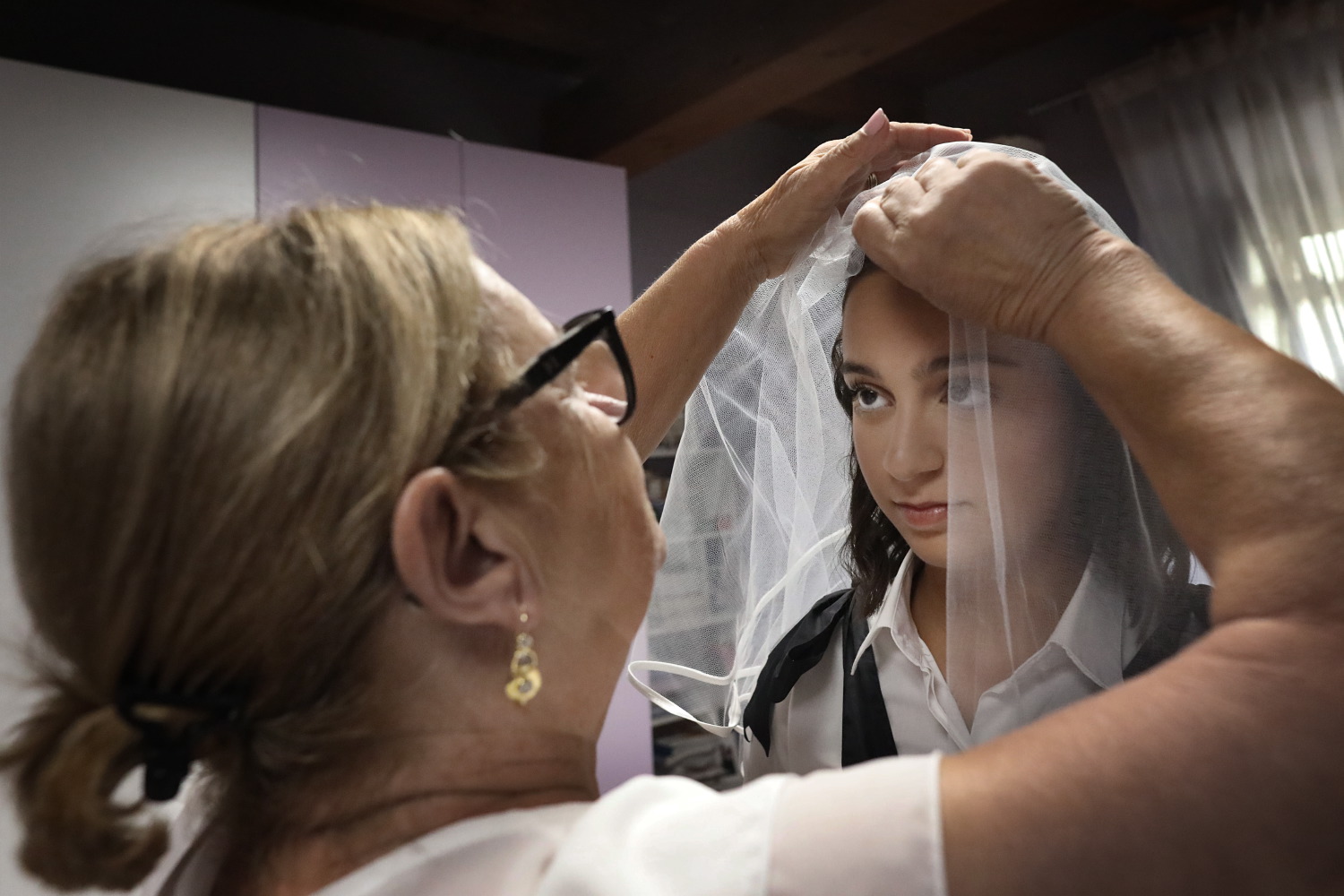
Gallese, Viterbo, Italy. The traditional dresser adjusts a Zitella’s veil during the dressing ceremony, following skills and gestures passed down through generations.
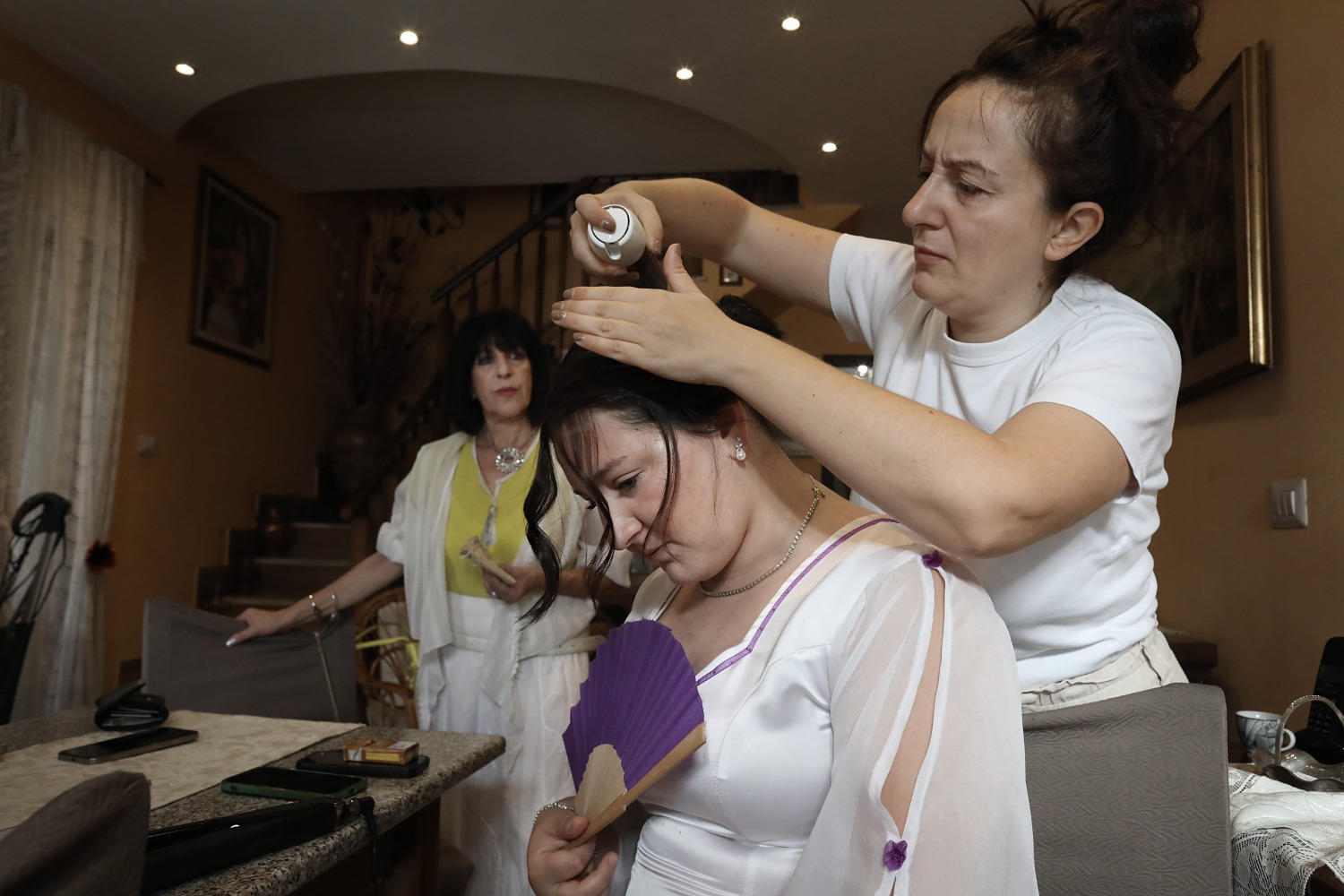
Gallese, Viterbo, Italy. A godmother prepares before the celebration, part of the ritual preceding the Zitelle’s procession.
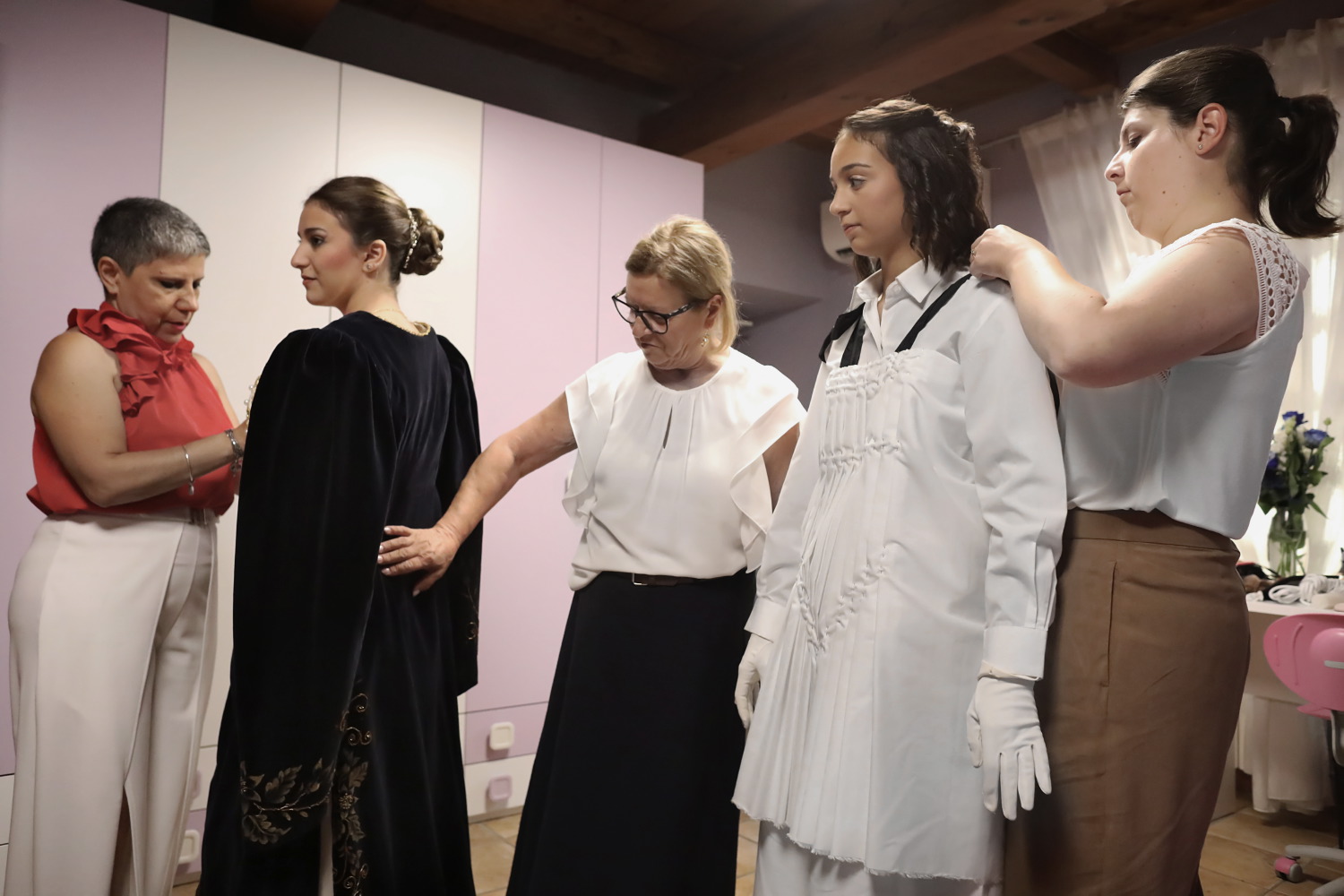
Gallese, Viterbo, Italy. The traditional dressers assist with the dressing of the Zitella and her godmother, carefully arranging every detail of their attire according to a tradition passed down through generations.
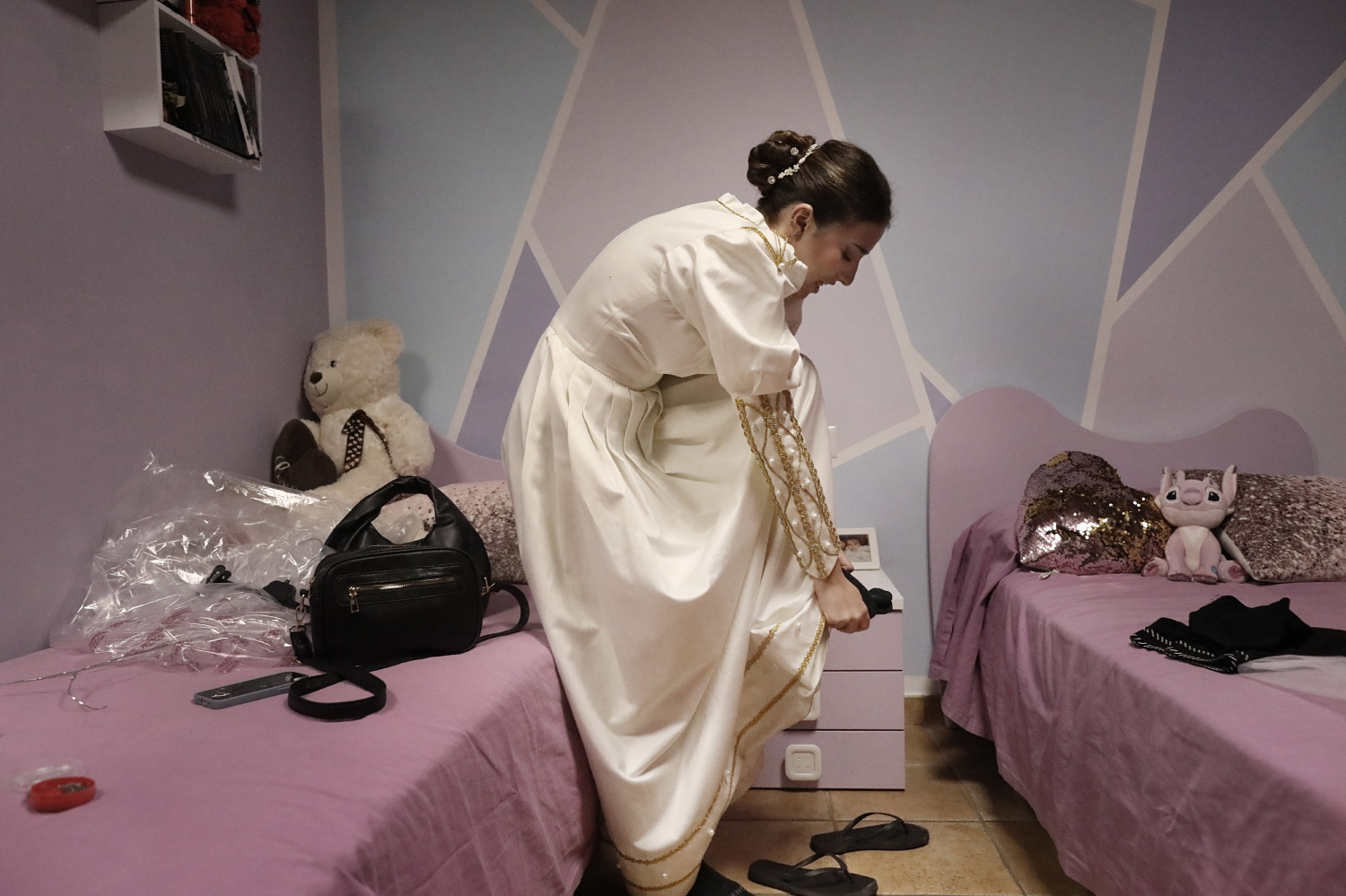
Gallese, Viterbo, Italy. A Zitella prepares before the celebration. Traditionally, the dress fabric was left intact so it could later be reused as part of her bridal trousseau.
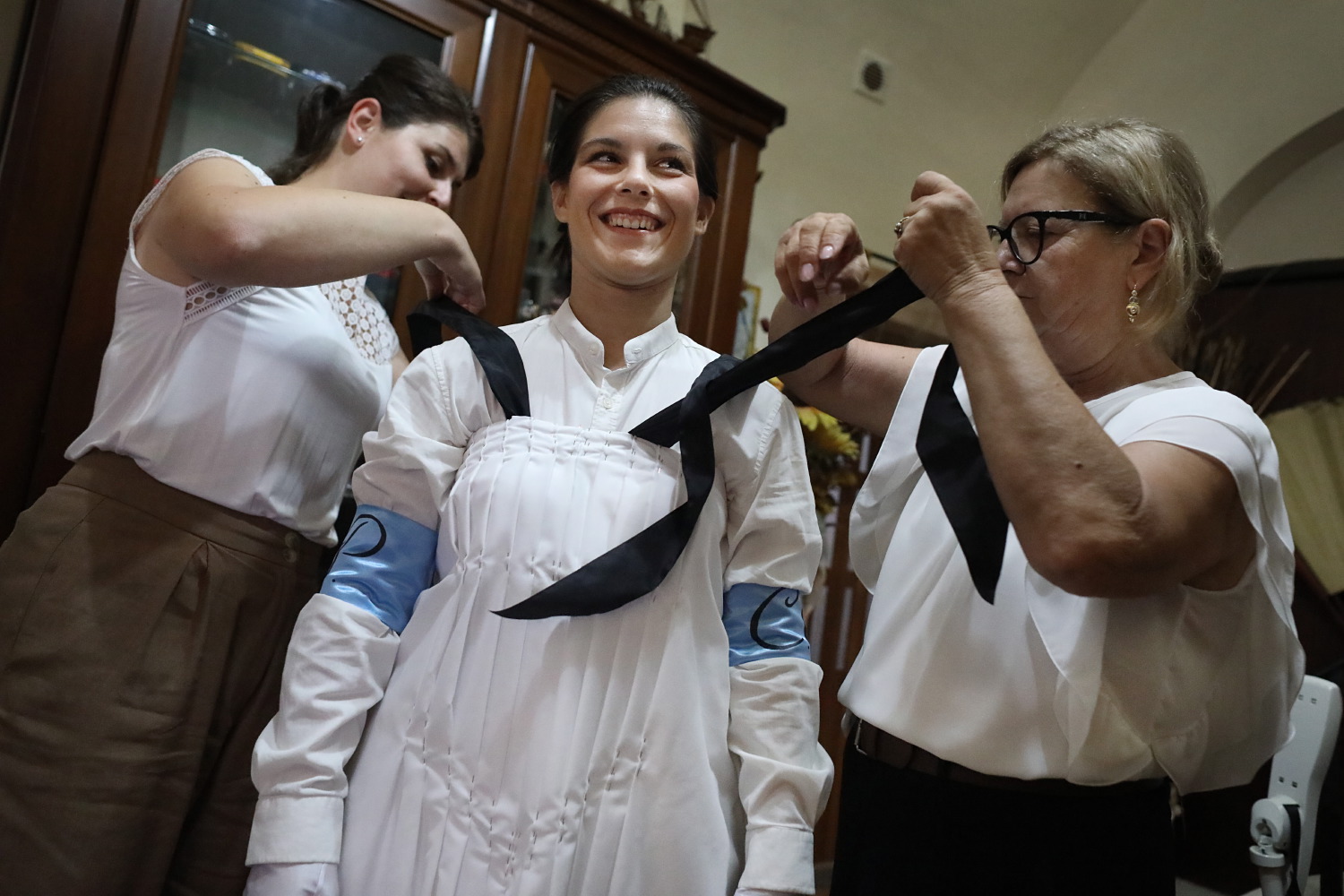
Gallese, Viterbo, Italy. The traditional dressers complete the dressing of a Zitella, repeating gestures passed down through generations.
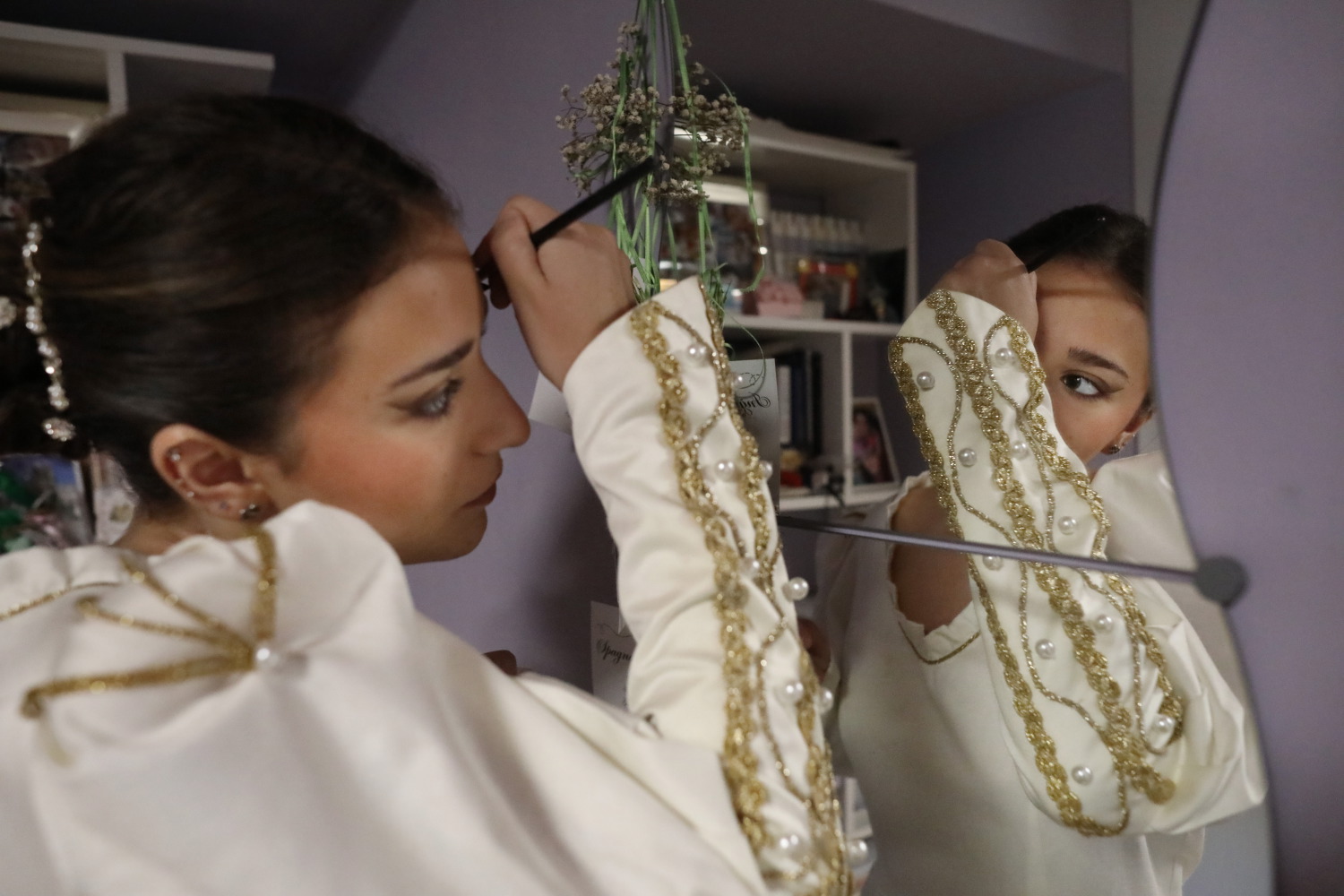
Gallese, Viterbo, Italy. A godmother applies her makeup in front of a mirror before the celebration.
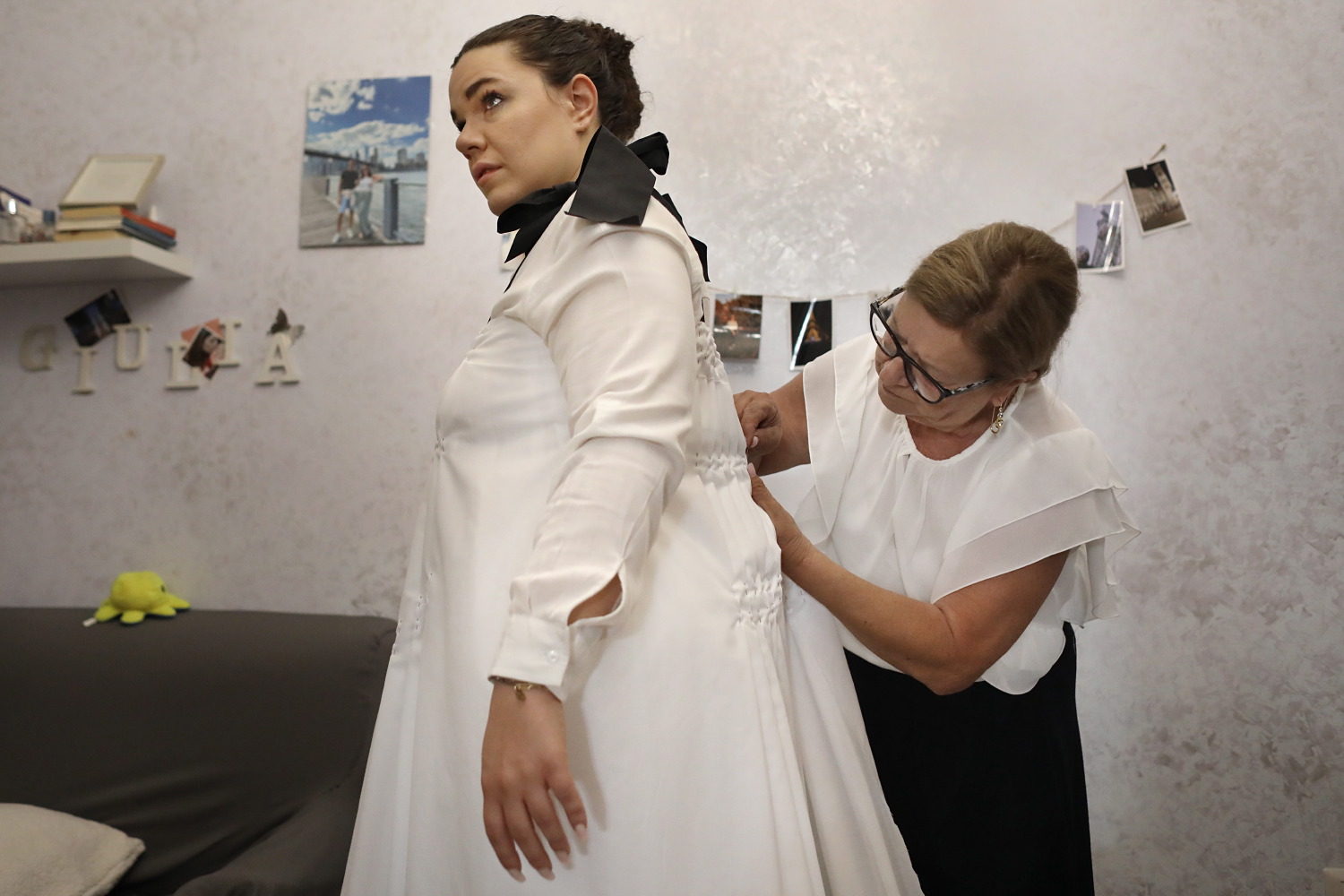
Gallese, Viterbo, Italy. During the dressing ceremony, the traditional dresser arranges a Zitella’s white dress, formed without stitching according to the ancient custom.
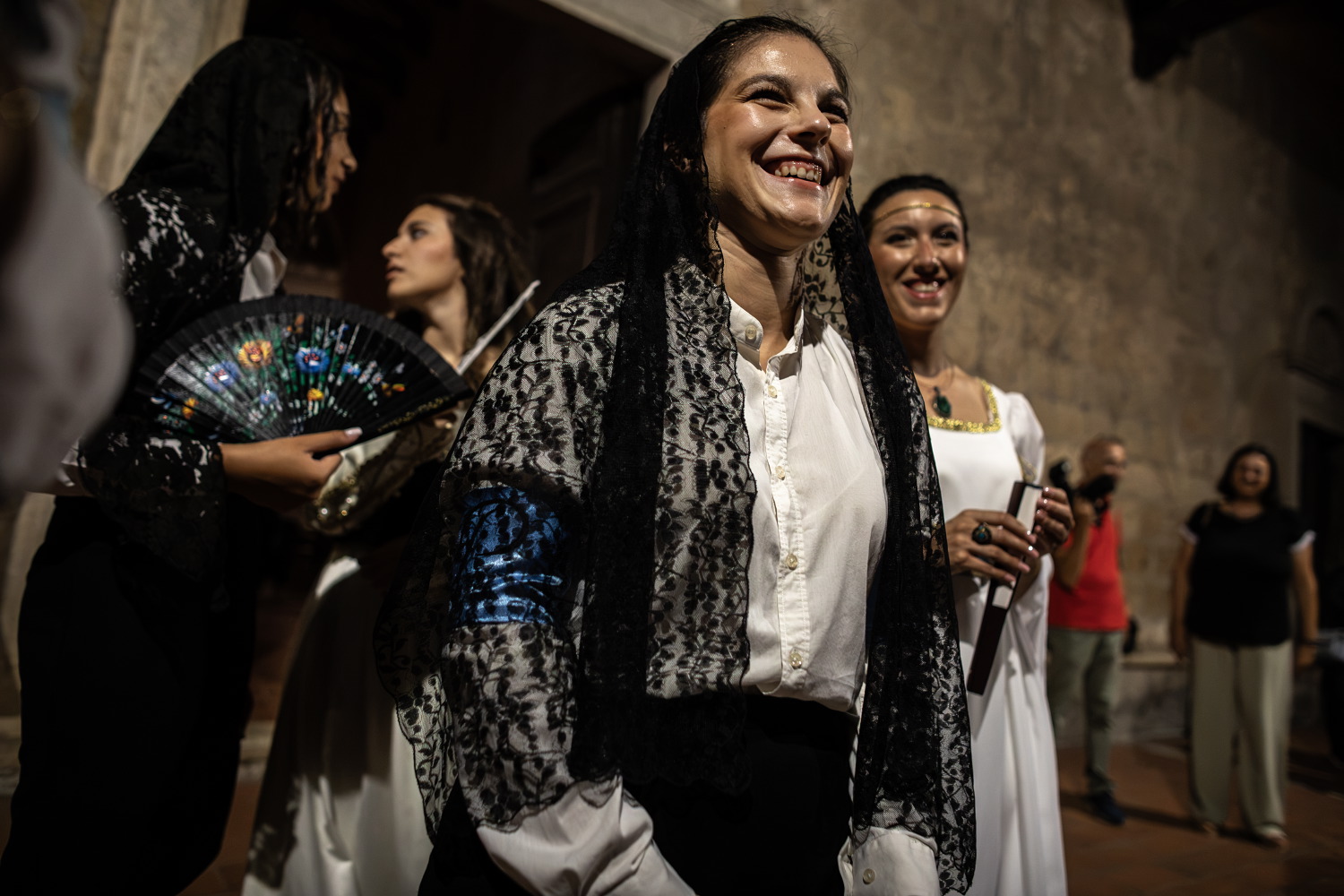
Gallese, Viterbo, Italy. A Zitella leaves the church with her godmother to take part in the celebration.
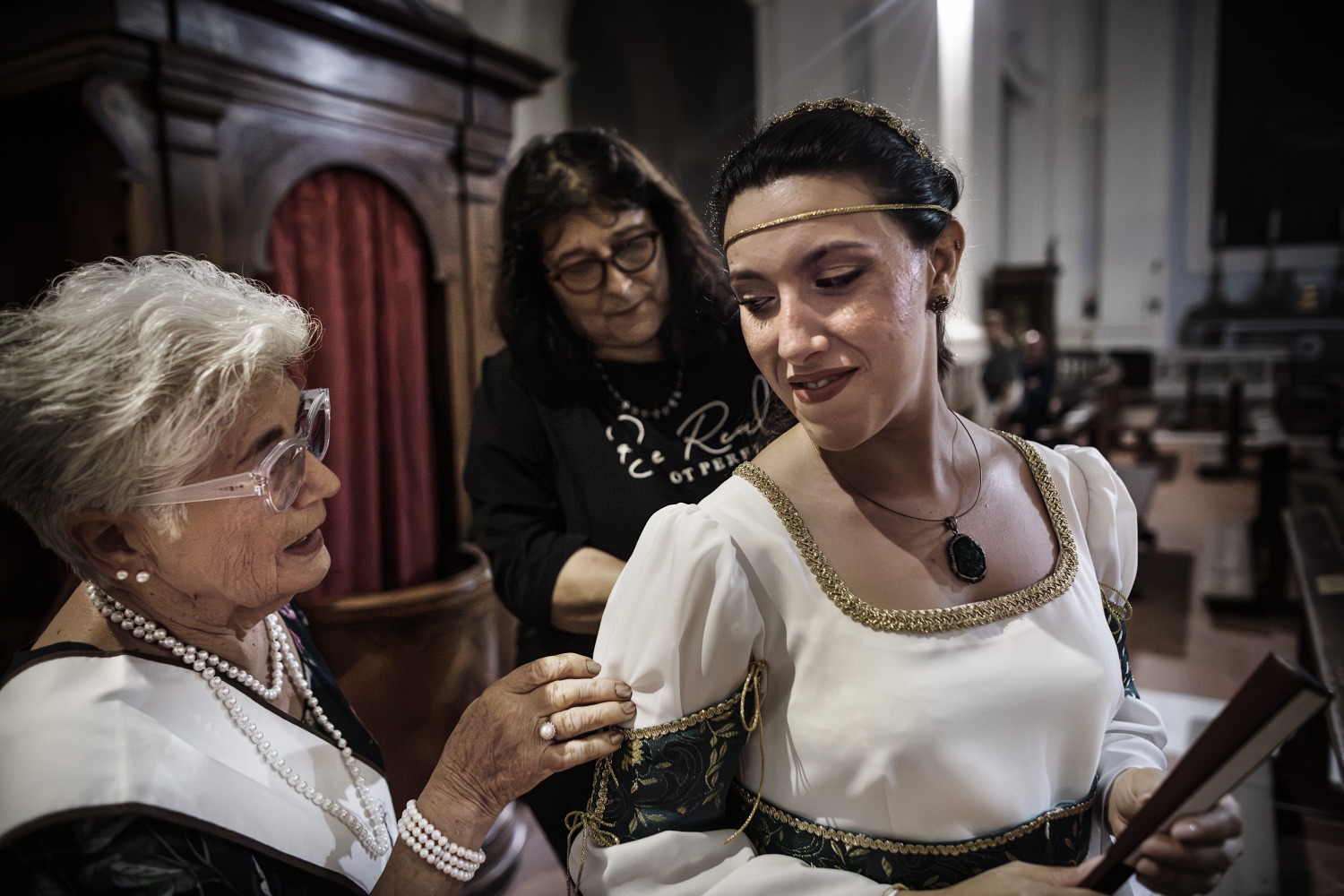
Gallese, Viterbo, Italy. A godmother with her mother during the final preparations inside the Co-Cathedral of Santa Maria Assunta.
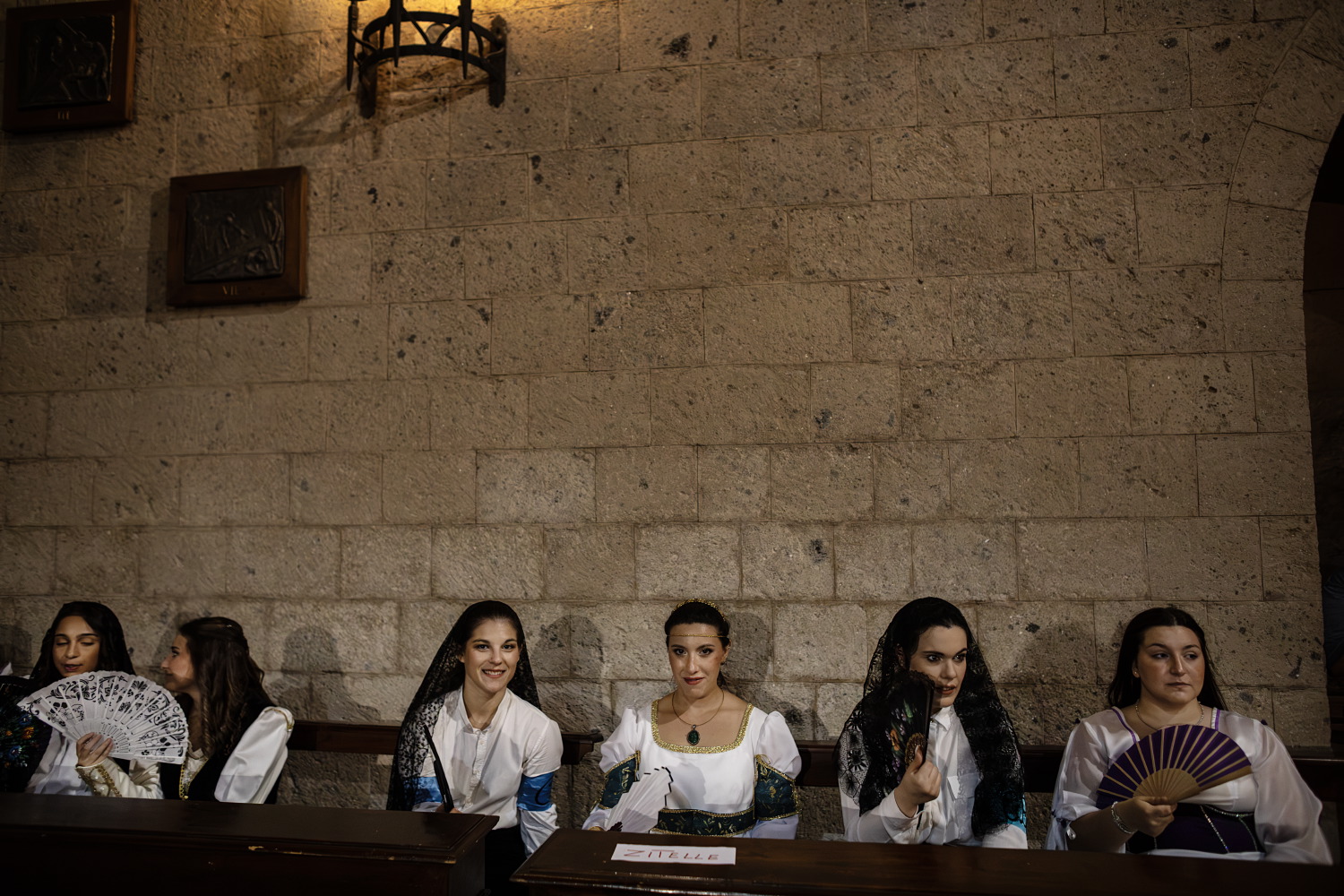
Gallese, Viterbo, Italy. The Zitelle and their respective godmothers gathered inside the Basilica of Saint Famian during the celebrations.
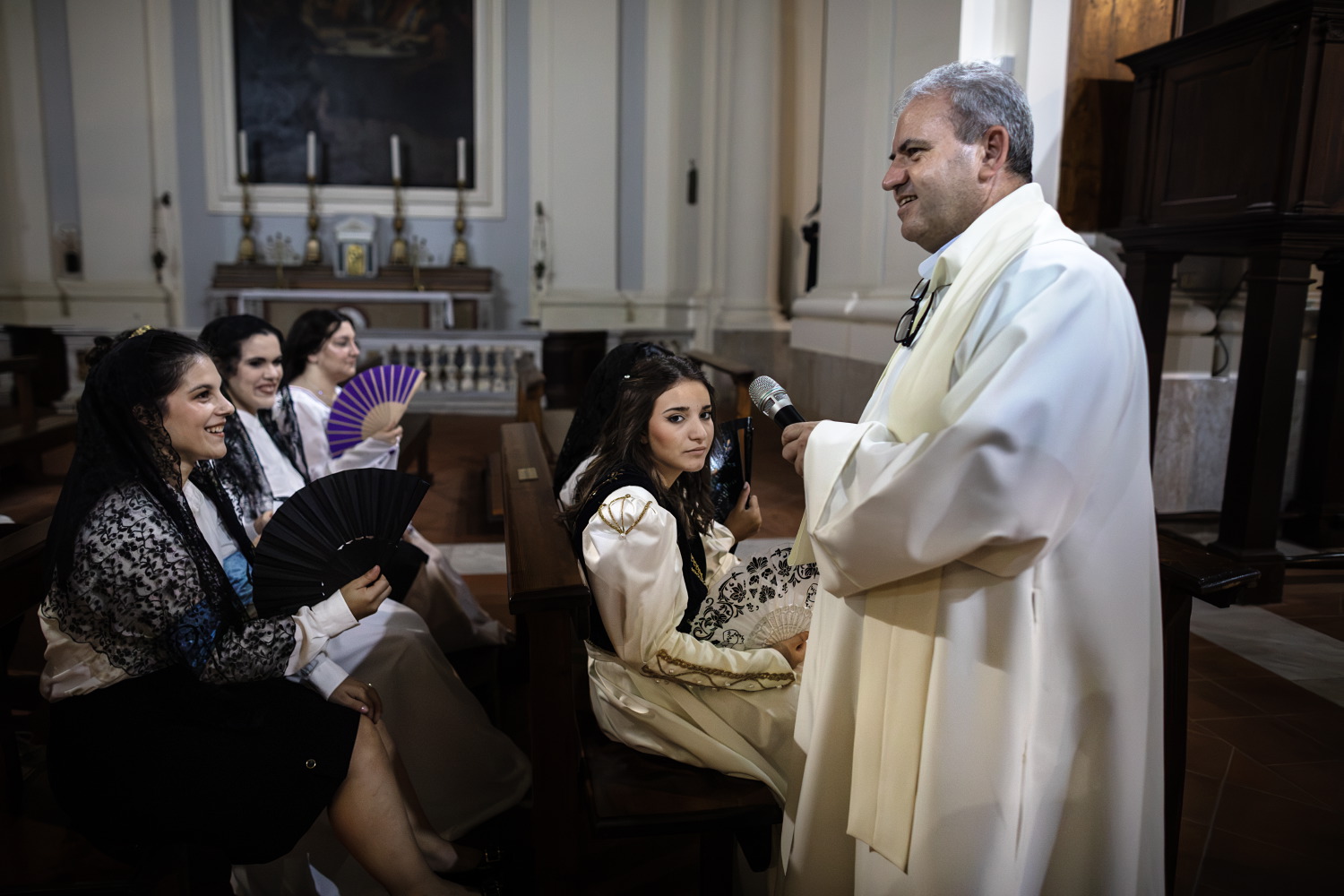
Gallese, Viterbo, Italy. The priest Don Chicco, meets the Zitelle and their respective godmothers before the celebration, following a tradition associated with the processions of Saint Famian since 1614.
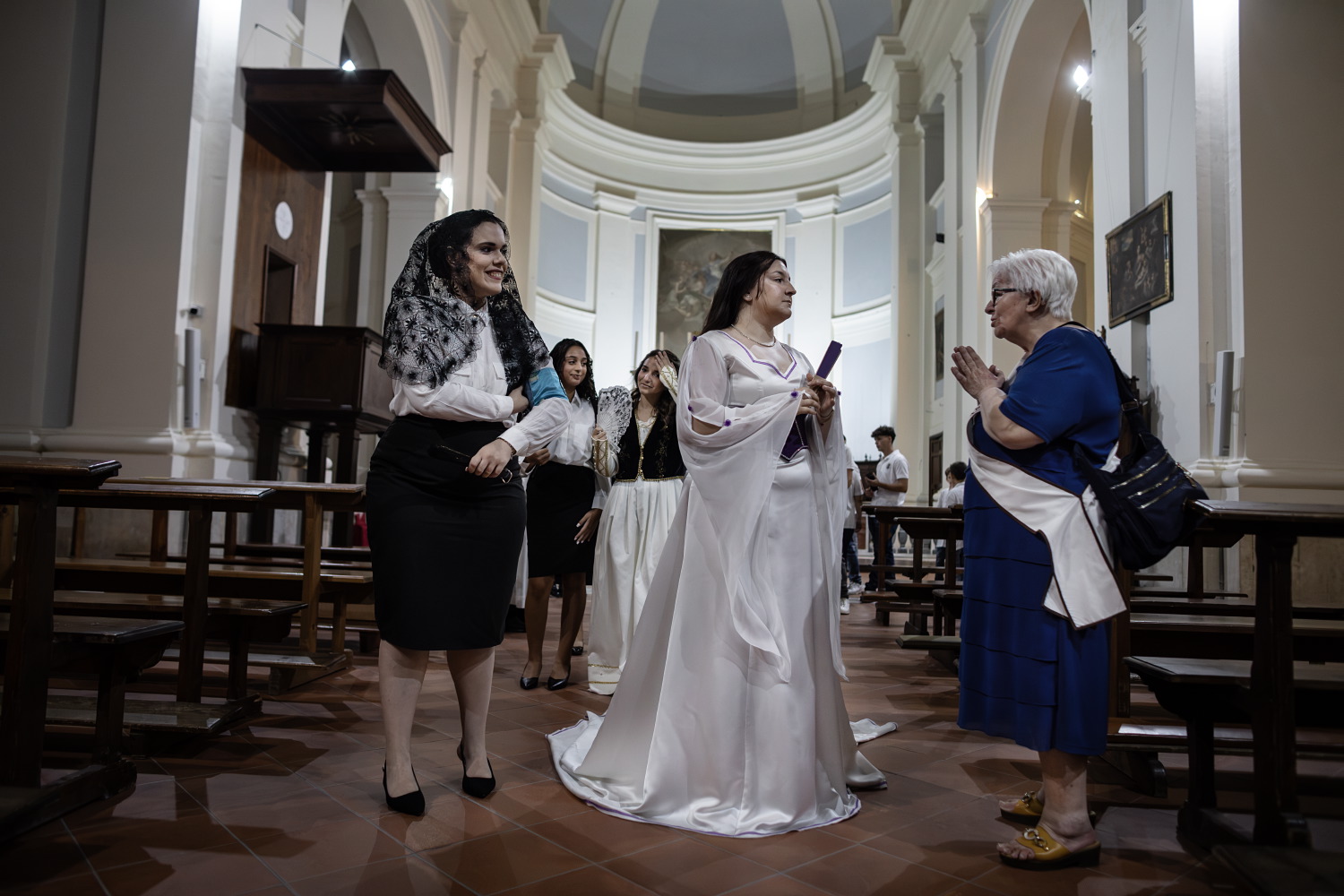
Gallese, Viterbo, Italy. A godmother listens to her mother’s final words of advice inside the Co-Cathedral of Santa Maria Assunta before the celebration.
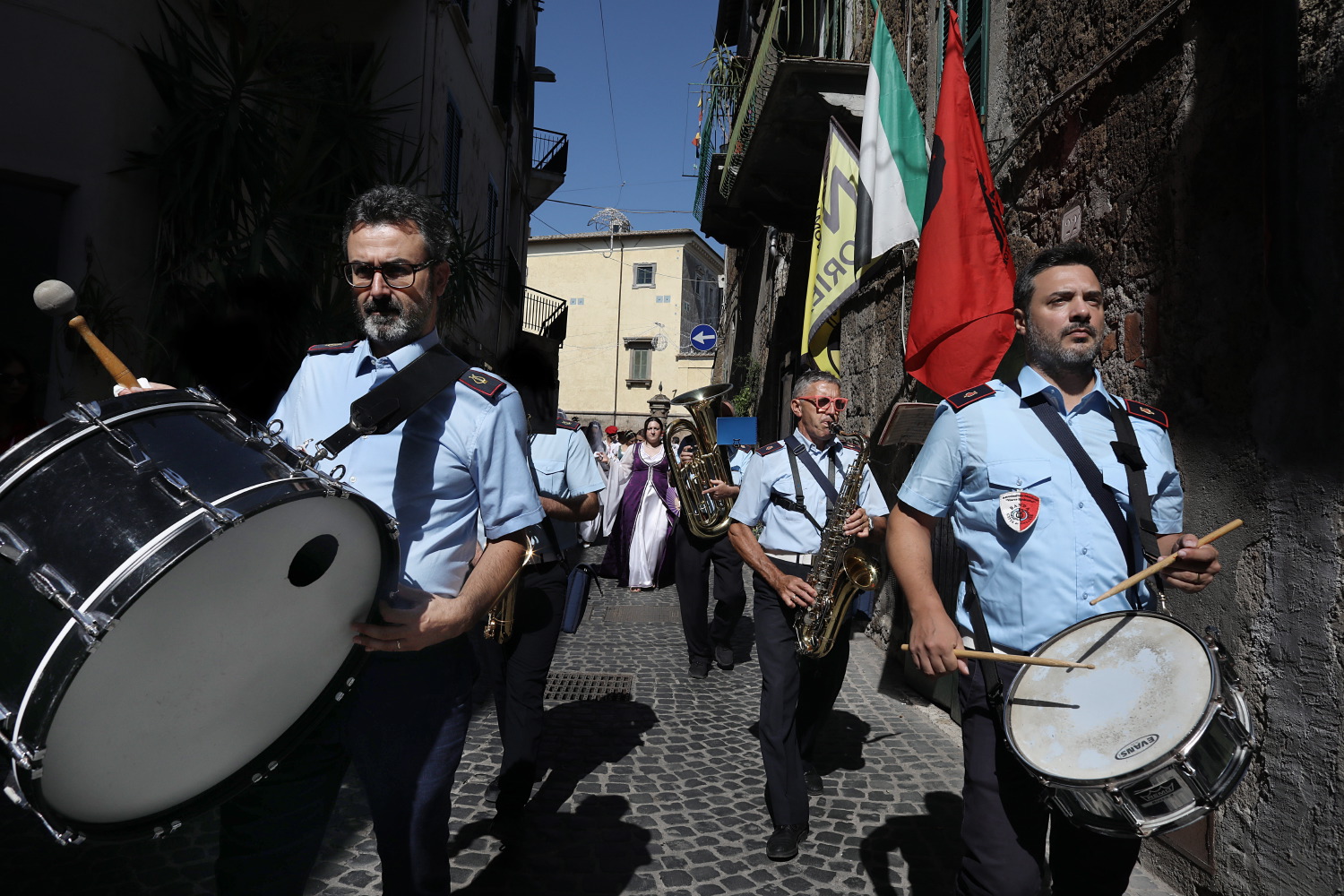
Gallese, Viterbo, Italy. The marching band makes its way through the historic centre during the celebrations accompanying the Zitelle.
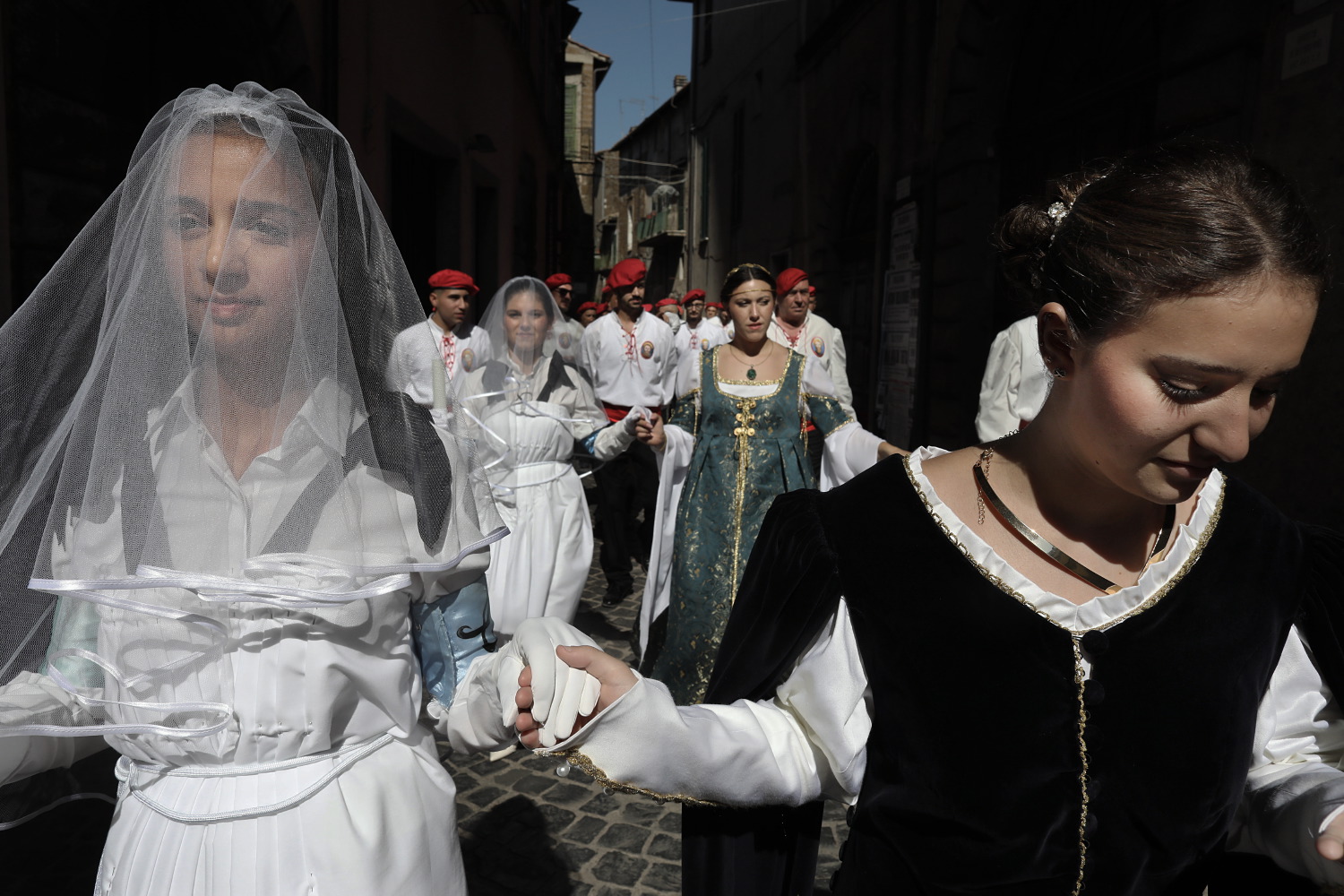
Gallese, Viterbo, Italy. A Zitella walks through the village accompanied by her godmother in Renaissance dress.
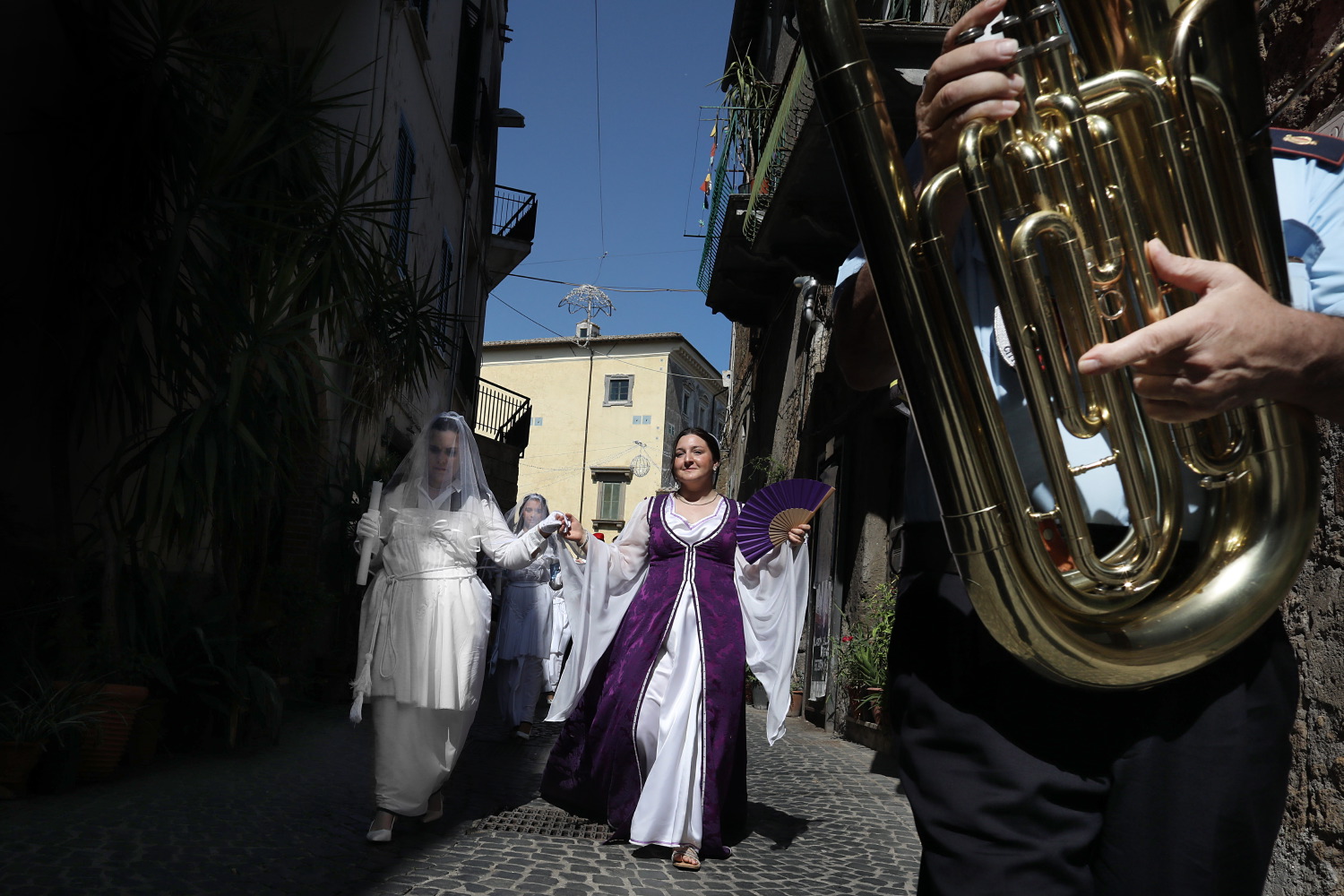
Gallese, Viterbo, Italy. A Zitella and her godmother walk through the historic centre behind the marching band.
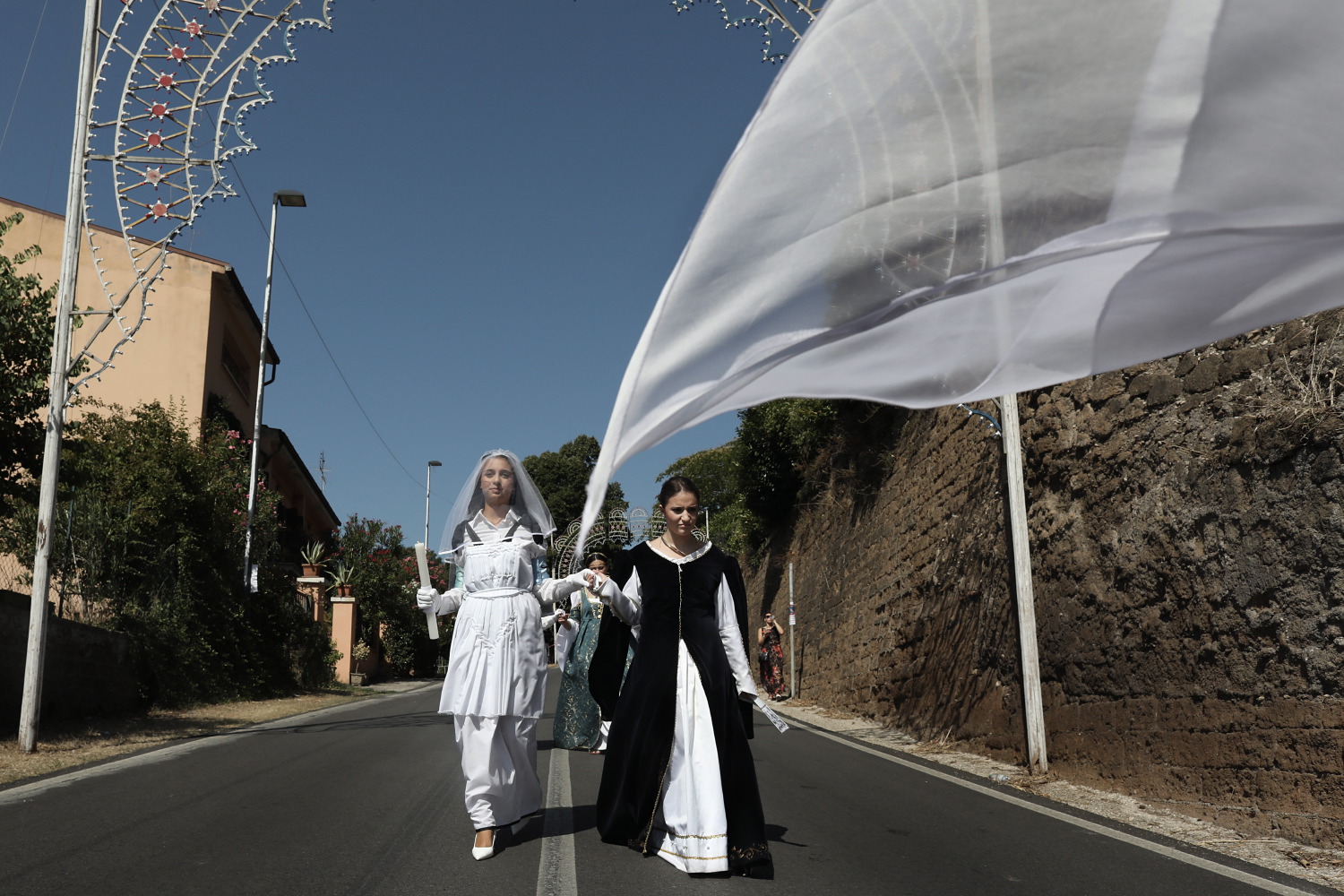
Gallese, Viterbo, Italy. A Zitella, wearing the traditional white dress and veil, walks through the streets of Gallese with her godmother.
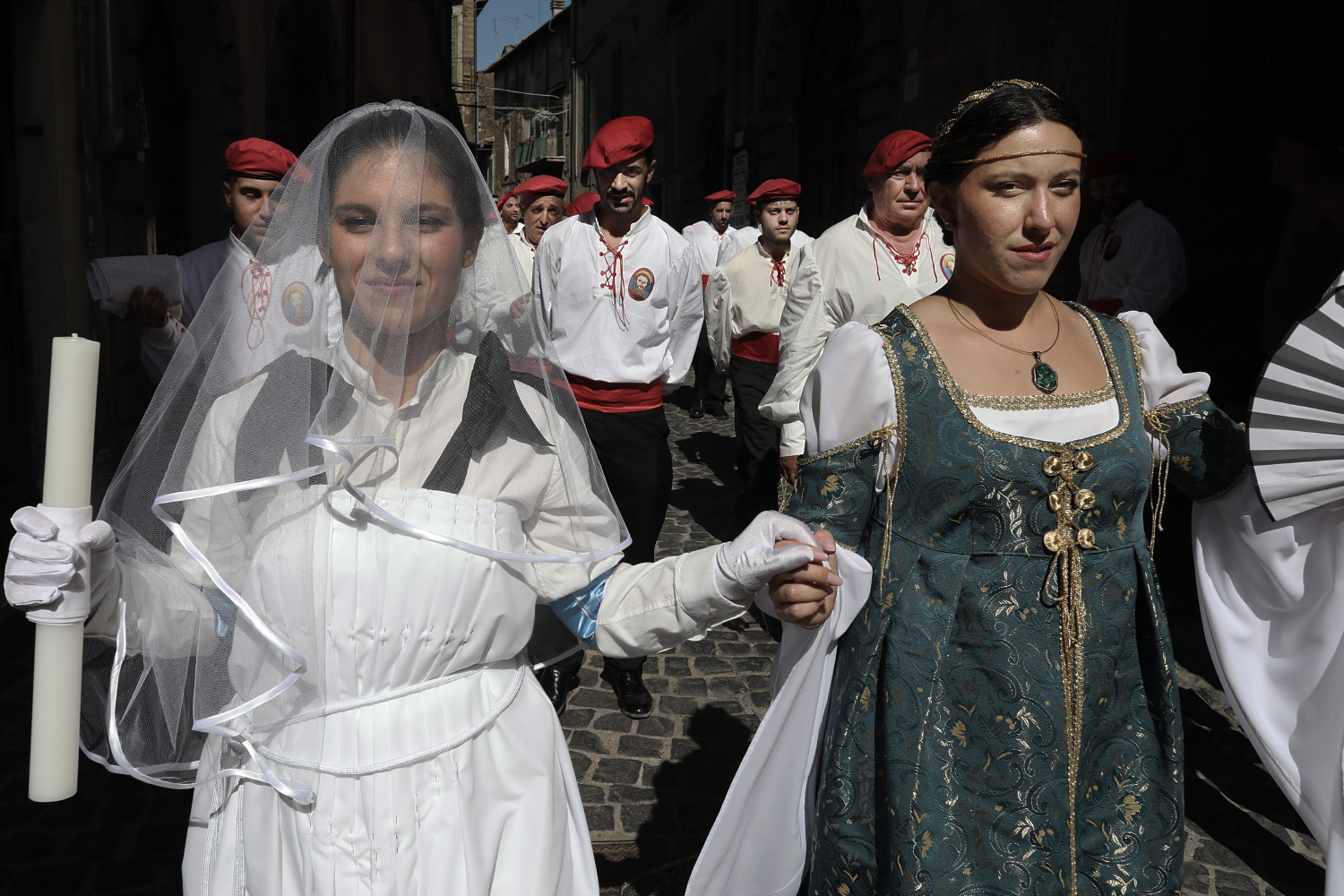
Gallese, Viterbo, Italy. A Zitella and her godmother during the procession. The white dress and veil distinguish the young women at the heart of this ancient custom.
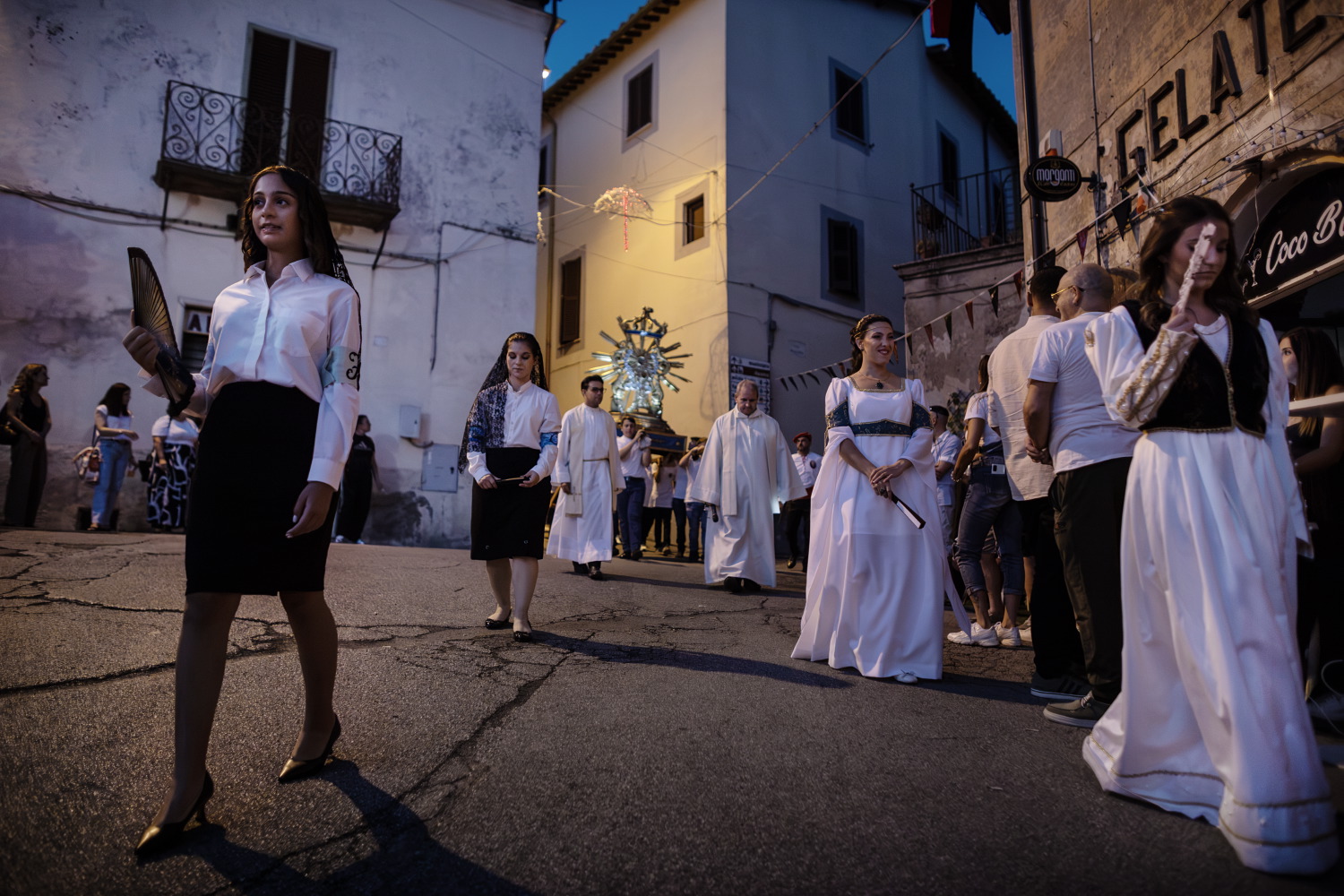
Gallese, Viterbo, Italy. The Zitelle take part in the evening procession dedicated to Saint Famian, accompanied by their godmothers.
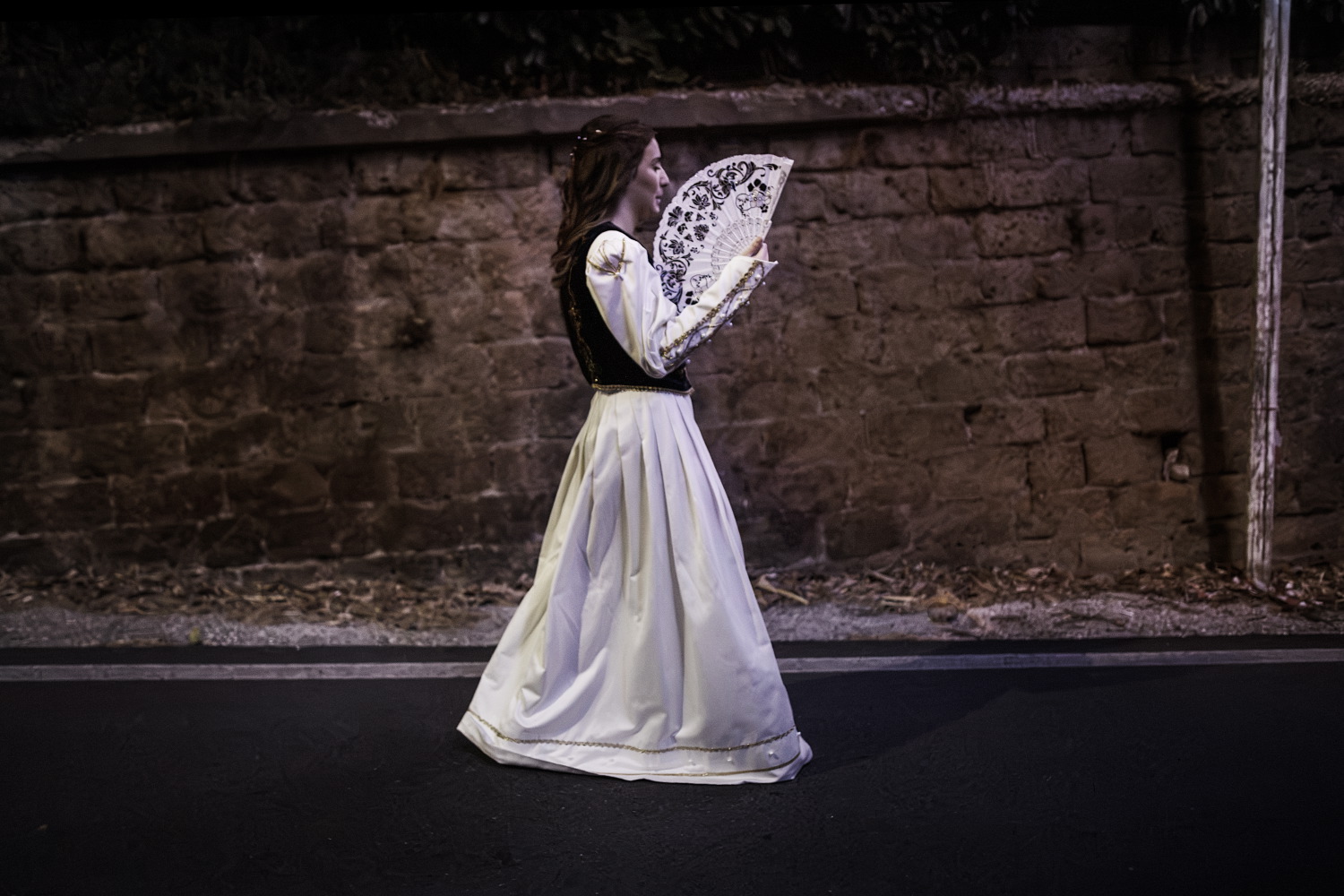
Gallese, Viterbo, Italy. A godmother in Renaissance dress walks along the village walls during the celebrations.
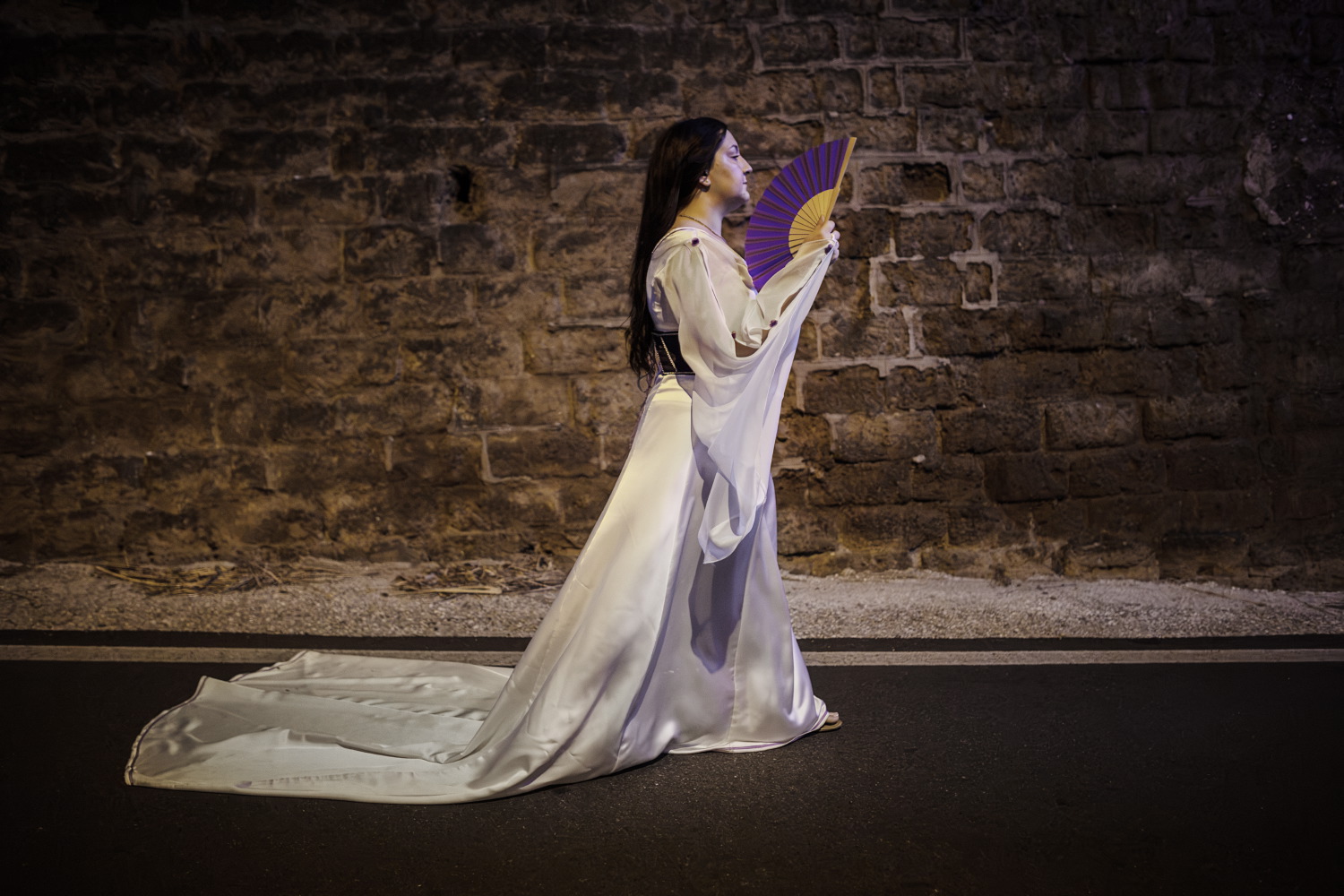
Gallese, Viterbo, Italy. A godmother carrying a traditional fan walks along the walls of Gallese during the procession.
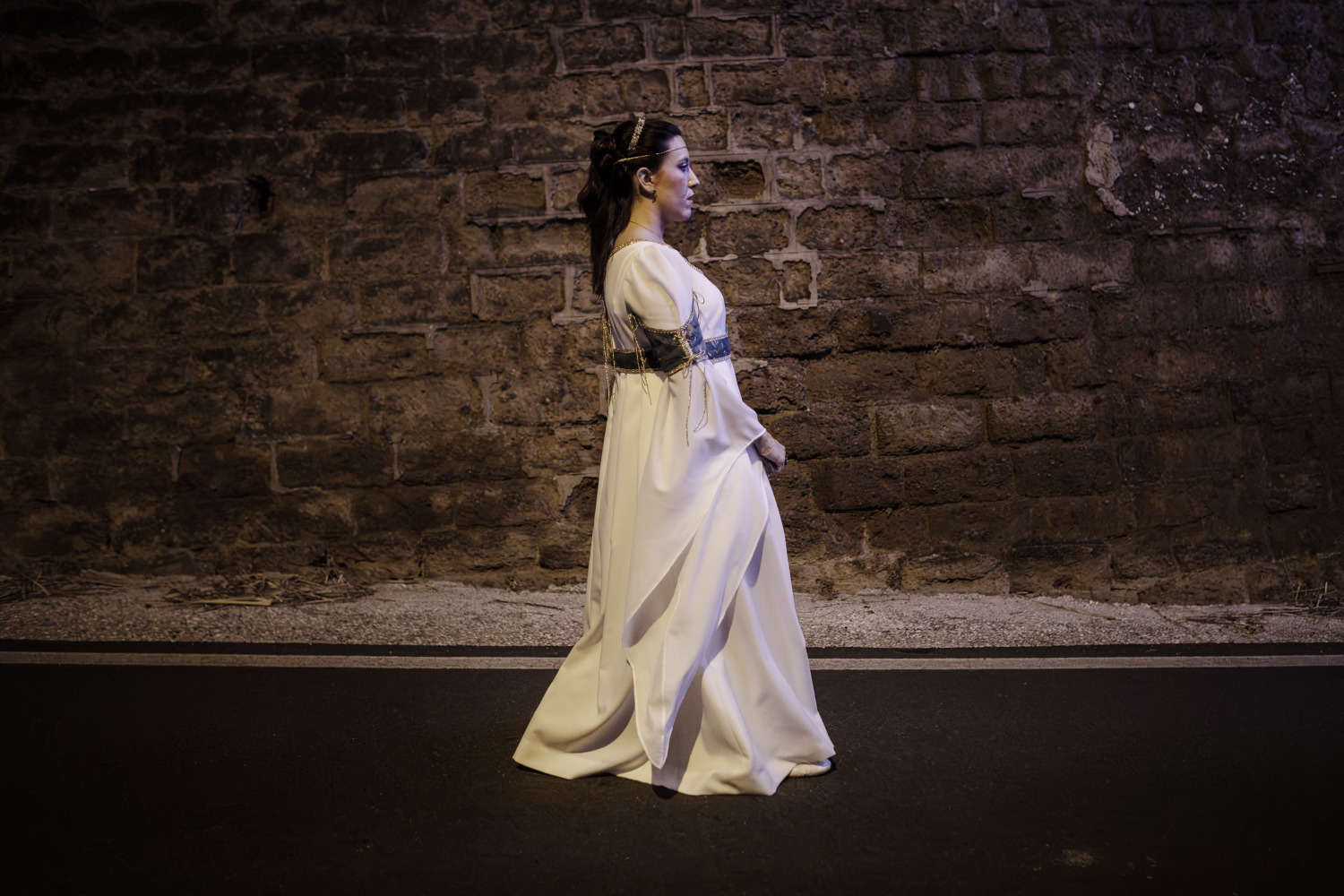
Gallese, Viterbo, Italy. A godmother walks through the village during the procession of the Zitelle.
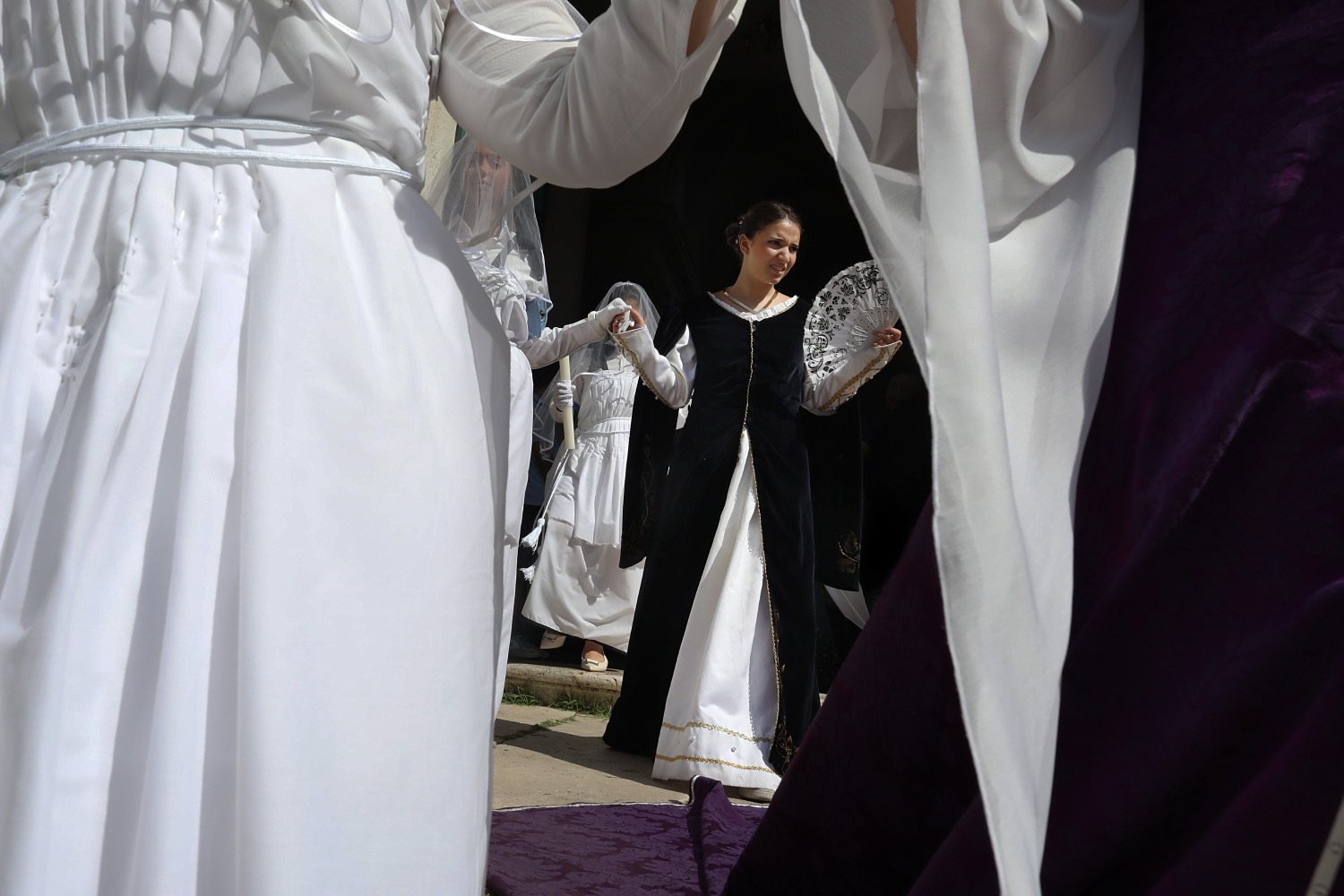
Gallese, Viterbo, Italy. A godmother accompanies a Zitella during the procession, following her traditional role in the ceremony.
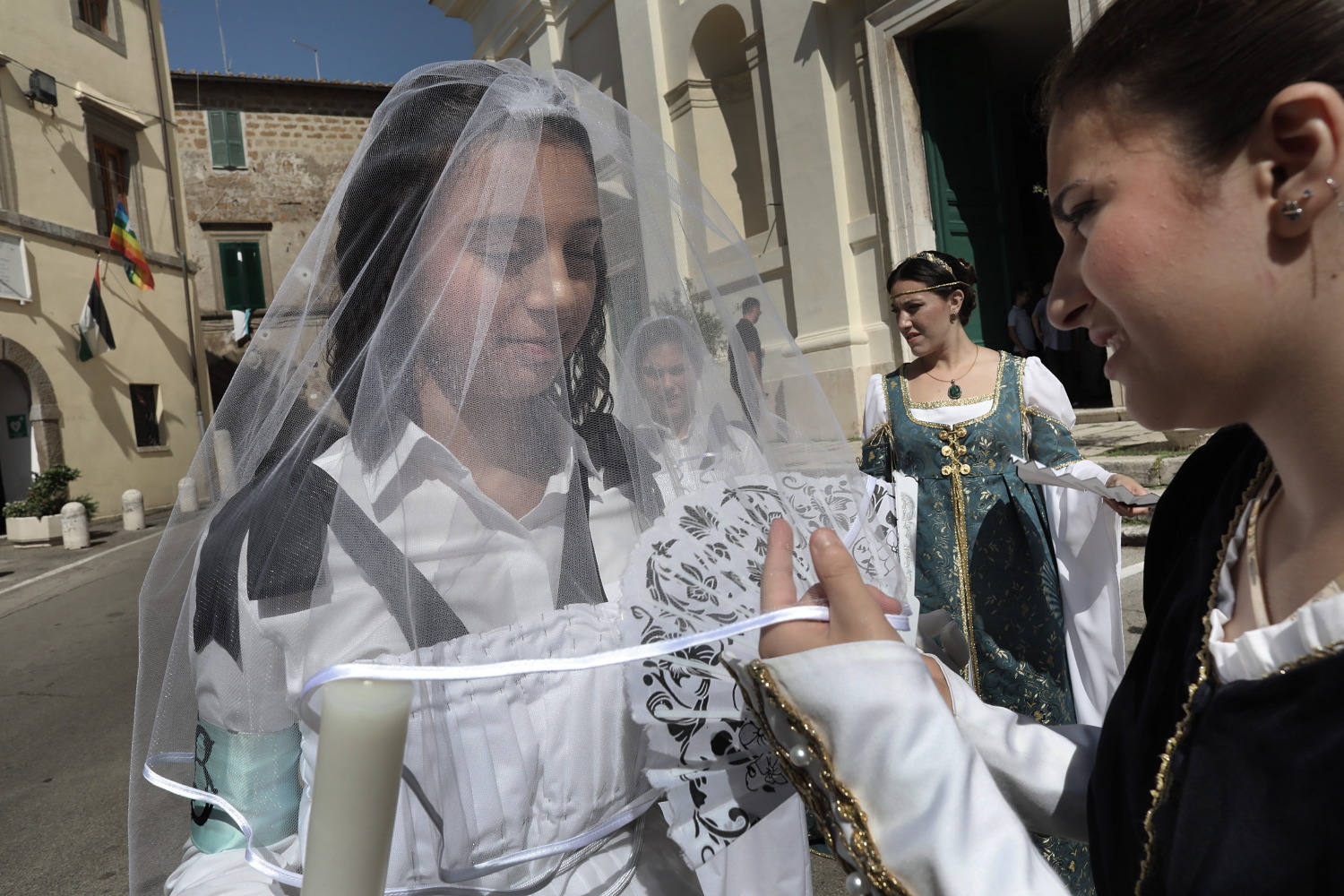
Gallese, Viterbo, Italy. A godmother adjusts a Zitella’s fan during the procession.
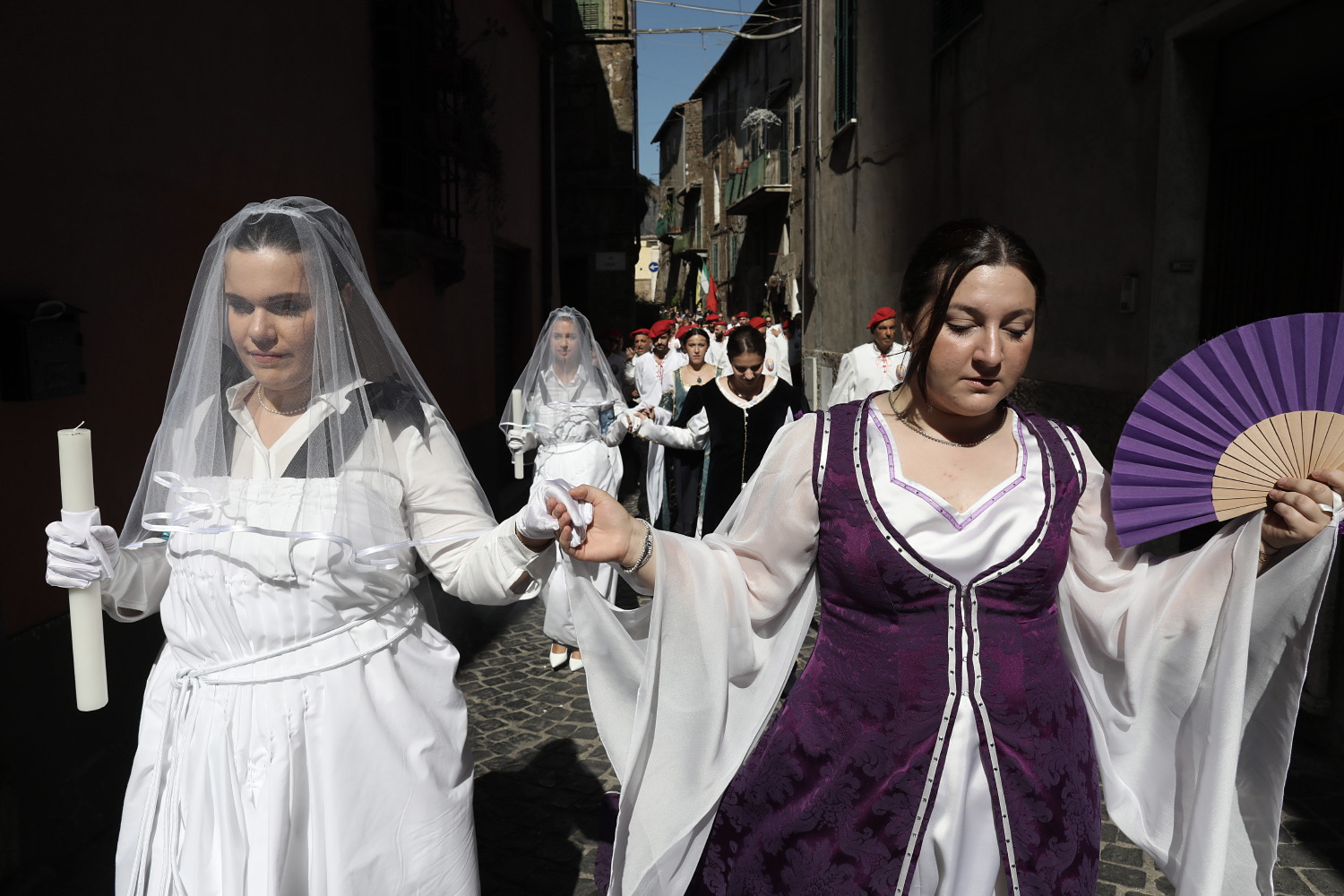
Gallese, Viterbo, Italy. A Zitella walks through the historic centre with her godmother in Renaissance dress.